Your shop is not chaotic because your team is bad.
It is chaotic because your system is broken.
Orders live in one place. Artwork lives somewhere else. Approvals are buried in email. Scheduling is on a whiteboard. Inventory gets checked too late. And somehow, the owner is still the person everyone goes to for the answer.
That is not a team problem. That is a system problem.
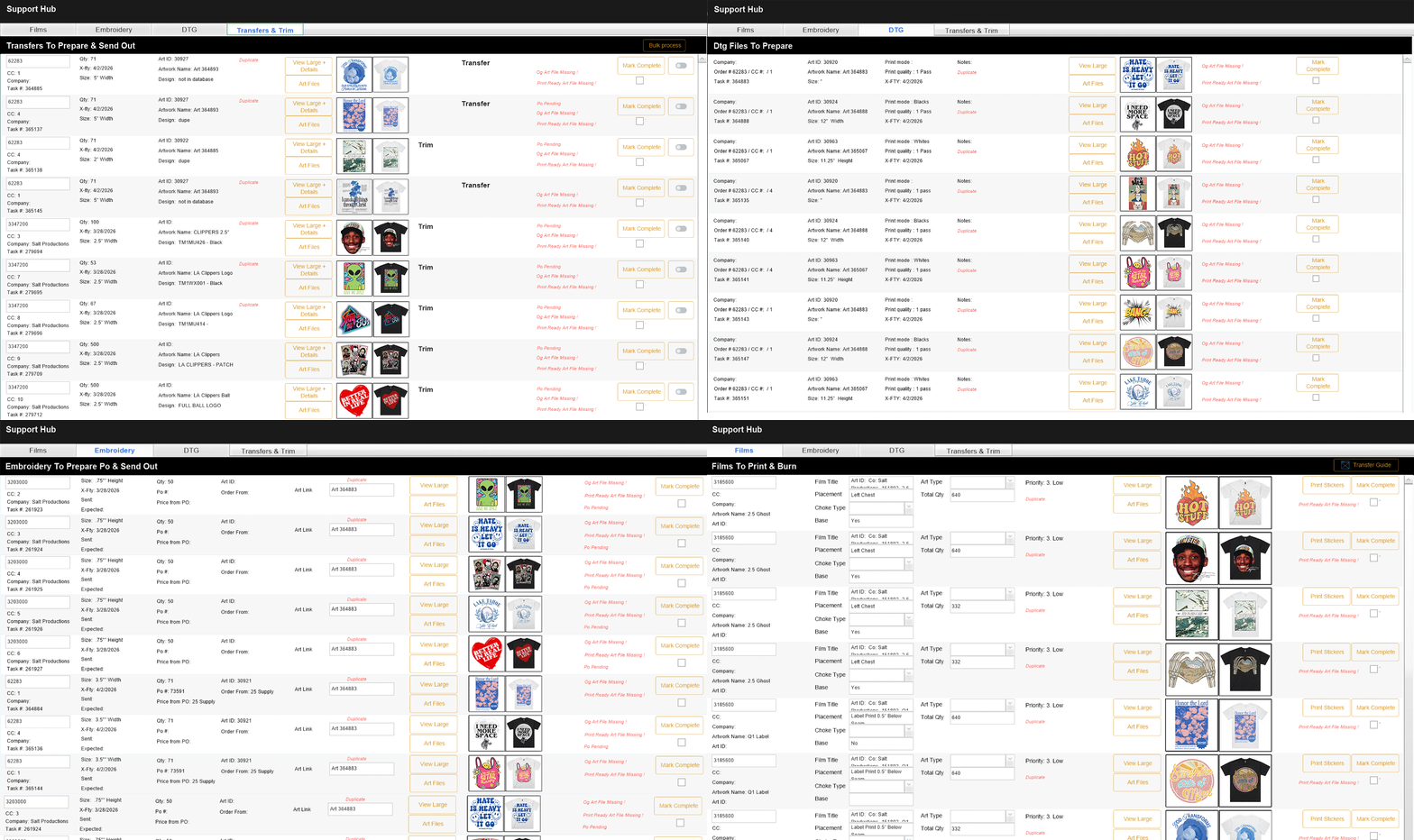
Does your shop feel like this by 10 AM?
- 01New orders come in before yesterday's jobs are fully updated.
- 02Someone is asking which art file is the final one. Again.
- 03The approval exists, but nobody knows where it is.
- 04The whiteboard changed, but not everyone got the memo.
- 05Blanks are missing after the job is already supposed to move.
- 06Production keeps stopping to ask what is next.
- 07Sales wants an update, but the answer is still in someone's head.
- 08The owner gets pulled in because no one fully trusts the system.
If this feels familiar, the problem is not your team. It is the way the shop is being forced to run.
And it does not stop there.
- 01The job status changed, but only one person knows.
- 02The customer approved the artwork, but production has not seen it.
- 03The blanks arrived, but nobody updated the order.
- 04The rush job moved up, but the schedule did not.
- 05The sales team promised a date, but production never saw the note.
- 06The owner knows what is blocked, but the team is still guessing.
- 07The shop is busy, but nobody has a clean view of what is actually happening.
That is how shops get stuck in reactive mode.
DTLA Print runs real traffic. Shop Titan was built from that pressure.
What worked at 20 orders breaks at 200.
A small shop can survive on memory, quick conversations, and a whiteboard. But as order volume grows, every missing update creates another interruption. Every unclear handoff creates another delay. Every buried approval creates another risk.
Growth does not create chaos. Growth exposes the system gaps that were already there.
The owner should not have to be the operating system.
Not because the owner wants to be involved in everything. Because the system still depends on them.
- 01They know which customer is sensitive.
- 02They know which jobs are hot.
- 03They know which approval came in late.
- 04They know which department is behind.
- 05They know who needs to be pushed.
- 06They know what is about to go wrong.
And that works until the shop grows. Then the owner becomes the system.
Your shop is not disorganized. Your information is.
Most production problems are not caused by lazy people, bad teams, or lack of effort. They happen because the information needed to move a job forward is scattered across too many disconnected places.
- Order details
- Artwork
- Approval
- Inventory
- Production
- Finishing
- Shipping
Shop Titan gives production shops one connected operating system.
Every order, art file, approval, note, schedule, inventory issue, department queue, and job status lives in one connected workflow so your team can move without guessing, without chasing, or without constantly asking the owner.
Orders
Artwork
Approvals
Scheduling
Inventory
Production Queues
Finishing
Shipping
Reporting
Every painful handoff gets a place, an owner, and a status.
Which art file is correct?
Artwork version control and approvals tied to the job.
Where is this order right now?
One current job status visible to the team.
What is production working on next?
Department queues for art, screen print, embroidery, DTF, finishing, and shipping.
Why did we find out inventory was missing today?
Inventory visibility before the job hits production.
Why does every quote feel different?
Pricing and margin visibility attached to the order.
Why does everything come back to the owner?
Owner-level reporting without the owner being the source of truth.
Imagine opening one system and knowing what is happening before someone has to ask.
- You know what is ready.
- You know what is blocked.
- You know what is waiting on approval.
- You know what is missing inventory.
- You know what is late.
- You know what is moving today.
- You know which department is overloaded.
- You know what needs your decision and what does not.
The shop keeps moving without the owner having to manually hold it together.
Shop Titan is built for shops that are past the “just wing it” stage.
This is for you if:
- Your shop is growing.
- Your team is asking too many status questions.
- Your schedule keeps changing.
- Your owner is still the bottleneck.
- Your approvals are hard to track.
- Your production meetings are too reactive.
- Your systems are patched together.
- You know you need more structure before scaling further.
Built from real production pressure.
Shop Titan was not built as a generic SaaS idea. It was built from the pressure of running real decoration production.
We built Shop Titan because we got tired of being the system. The whiteboard. The inbox. The “ask the owner” loop. So we built the workflow that runs our shop. Now it can run yours.
This is software built around how production actually breaks.
Common questions before you see it.
Is this just project management software?
expand_more
No. Generic project management tools are not built around decoration production, approvals, art files, job status, inventory dependencies, rush jobs, and department handoffs.
Can this help if we already use spreadsheets?
expand_more
Yes. Shop Titan is designed for shops that have outgrown spreadsheets but still rely on them because nothing has replaced the full workflow.
Is this only for large shops?
expand_more
No. It is for shops that are growing or already feeling the pain of disconnected systems, unclear scheduling, and too much owner dependency.
Does every button go to the same form?
expand_more
Yes. Every CTA on this page leads to the same demo request. One path. One conversation. No funnels.
Your shop can keep growing. But your current system may not survive it.
If your team is already relying on whiteboards, spreadsheets, emails, memory, and constant interruptions, the problem will not get smaller as volume grows. Shop Titan gives you the structure to scale with more clarity, more control, and less chaos.